The Power of "Chunking": Breaking Down Complex Information for Easier Learning
Unlock Your Brain's Potential: The Power of Chunking Information
Hey there, knowledge seekers! Ever feel like you're drowning in information? Like trying to drink from a firehose when all you really want is a refreshing sip of understanding? We've all been there. Whether you're cramming for an exam (remember those days?), learning a new coding language (hello, Python!), or even just trying to remember the ever-growing list of passwords for your online accounts (ugh, the bane of our digital existence!), the sheer volume of stuff we need to learn can be overwhelming.
Think about it. You're trying to learn how to play the guitar. Your instructor throws scales, chords, strumming patterns, and music theory at you all at once. Suddenly, what seemed like a fun hobby feels more like a grueling academic exercise. Or maybe you’re trying to understand blockchain technology. White papers, technical jargon, and constantly evolving concepts leave you feeling more confused than enlightened. It’s like trying to assemble an IKEA bookshelf without the instructions... or with instructions written in Swedish. We've all been through that too, haven't we?
And let's be honest, multitasking is a myth. Our brains aren't designed to juggle a million things at once. Instead, they rapidly switch between tasks, which leads to decreased focus and increased errors. It's like trying to conduct an orchestra while simultaneously juggling chainsaws. (Please don't actually try that.)
But what if I told you there was a simple, yet powerful, technique that could transform the way you learn and remember information? A way to turn that overwhelming firehose into a manageable stream? That's where "chunking" comes in. It’s not about some fancy brain hack or a magical pill (sorry!). It’s a practical strategy that leverages the way our brains naturally process information.
Chunking is the secret sauce to conquering complex topics, mastering new skills, and finally remembering where you put your keys (okay, maybe not that last one, but it's worth a try!). Intrigued? Keep reading, because we're about to dive deep into the power of chunking and how you can use it to unlock your brain's full potential.
What Exactly IS Chunking?
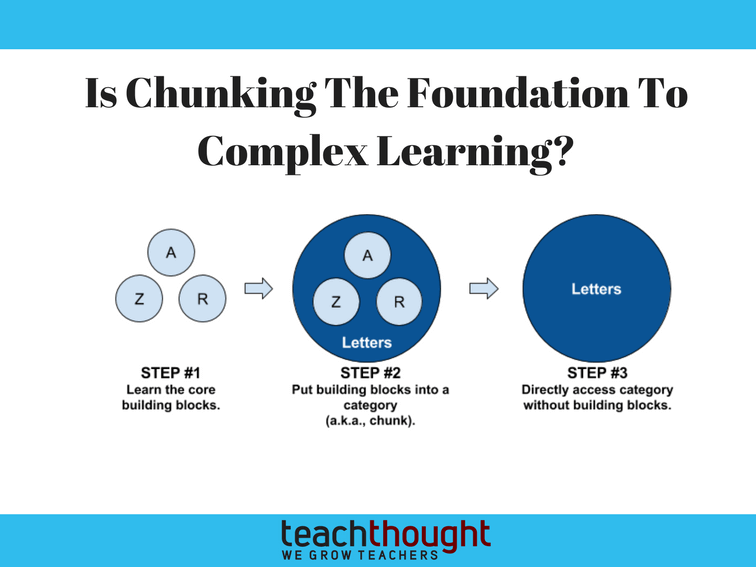
At its core, chunking is the process of breaking down large, complex pieces of information into smaller, more manageable units. Think of it like building with LEGOs. Instead of trying to construct an entire castle out of individual bricks at once, you first create smaller sections – walls, towers, a drawbridge – and then assemble those chunks together to form the final masterpiece. Our brains work in a similar way.
The magic number to remember here is 7 +/- 2. This refers to the capacity of our short-term memory, as famously discovered by psychologist George Miller. We can typically hold around 5 to 9 pieces of information in our short-term memory at any given time. When we try to cram more than that, things start to get lost, confused, and generally overwhelming. This is why chunking is so effective: it allows us to bypass the limitations of our short-term memory by grouping related information together into meaningful chunks.
Consider a phone number: 555-123-4567. Instead of trying to remember ten individual digits, we naturally break it down into three chunks: the area code (555), the exchange (123), and the line number (4567). This makes it much easier to recall the entire number.
How Does Chunking Work Its Magic?
Chunking works by leveraging our brain's natural ability to recognize patterns and create associations. When we group related pieces of information together, we create a stronger neural pathway in our brain, making it easier to retrieve that information later. It’s like creating a well-worn path through a forest instead of trying to bushwhack your way through every time.
Here’s a breakdown of the key processes involved:
• Pattern Recognition: Our brains are wired to seek out patterns. When we see a group of items that are similar or related, we naturally group them together. For example, we instantly recognize a sequence like 2, 4, 6, 8 as a pattern.
• Meaningful Associations: Chunking works best when the chunks are meaningful and related to each other. For example, instead of trying to memorize a random string of letters, try grouping them into acronyms or memorable words.
• Reduced Cognitive Load: By breaking down information into smaller chunks, we reduce the cognitive load on our short-term memory. This allows us to focus our attention on understanding and processing the information, rather than just trying to remember it.
• Enhanced Retrieval: When we retrieve one chunk of information, it acts as a trigger for the other chunks that are associated with it. This makes it easier to recall the entire set of information.
Chunking in Action: Real-World Examples
Now that we understand the theory behind chunking, let's look at some practical examples of how it can be applied in various real-world scenarios:
• Learning a New Language: Instead of trying to memorize a long list of vocabulary words, group them by theme or topic (e.g., food, travel, family). Focus on learning phrases and sentence structures, rather than just individual words. Use flashcards with images and context to create stronger associations.
• Mastering a Complex Skill (e.g., Coding): Break down the skill into smaller, more manageable tasks. Start with the basics (e.g., variables, data types, control flow) and gradually build up to more complex concepts. Practice coding small programs and projects to reinforce your understanding. Online platforms like Codecademy and Coursera often structure their courses using chunking principles.
• Studying for an Exam: Divide the material into smaller sections based on topics or chapters. Create study guides or flashcards for each section. Use mnemonics or other memory aids to help you recall key concepts. Take regular breaks to avoid burnout and allow your brain to consolidate the information.
• Remembering a Presentation: Structure your presentation into clear, logical sections with a strong opening, a clear body, and a compelling conclusion. Use visual aids (e.g., slides, images, charts) to reinforce your key points. Practice your presentation multiple times to ensure that you can deliver it smoothly and confidently.
• Learning New Technologies: With the rapid advancement of technology, it's essential to keep learning. Websites like You Tube, Udemy, and Skillshare offer courses that break down complex topics into smaller, digestible segments. This is perfect for learning at your own pace.
How to Implement Chunking Effectively: A Step-by-Step Guide
Ready to start chunking your way to success? Here's a practical guide to help you implement this powerful technique:
• Identify the Big Picture: Before you start chunking, take a step back and get a clear understanding of the overall topic or skill you're trying to learn. This will help you identify the key components and how they relate to each other.
• Break It Down: Divide the information into smaller, more manageable units. Look for natural groupings or categories. Don't be afraid to experiment with different ways of chunking until you find what works best for you. Remember the 7 +/- 2 rule!
• Create Meaningful Associations: Make connections between the chunks. Use mnemonics, acronyms, or visual aids to help you remember the relationships between the different pieces of information. Think of real-world examples or analogies that can help you understand the concepts.
• Practice and Repetition: Regularly review the chunks to reinforce your understanding. Use spaced repetition techniques to gradually increase the intervals between reviews. This will help you transfer the information from your short-term memory to your long-term memory. Consider using apps like Anki or Quizlet.
• Test Yourself: Regularly test yourself on the material. This will help you identify any gaps in your knowledge and reinforce your understanding. Use flashcards, practice quizzes, or even just try explaining the concepts to someone else.
• Stay Organized: Keep your notes and materials organized. Use a system that works for you, whether it's a digital note-taking app like Evernote or a physical notebook. This will make it easier to find and review the information later.
• Don't Overload: Be mindful of your cognitive load. Don't try to learn too much at once. Take regular breaks to avoid burnout and allow your brain to consolidate the information. The Pomodoro Technique (25 minutes of focused work followed by a 5-minute break) can be very helpful.
• Get Creative: There is no one-size-fits-all approach to chunking. Experiment with different techniques and find what works best for you. Use your imagination and creativity to make the learning process more engaging and enjoyable.
Advanced Chunking Techniques: Level Up Your Learning
Once you've mastered the basics of chunking, you can start exploring some advanced techniques to further enhance your learning and memory:
• Hierarchical Chunking: This involves creating a hierarchy of chunks, where smaller chunks are grouped together into larger chunks. This is particularly useful for learning complex topics that have many layers of information. For example, when learning about the human body, you might start with the major systems (e.g., circulatory, respiratory, digestive) and then break each system down into its individual organs and components.
• Spaced Repetition Systems (SRS): SRS algorithms are designed to optimize the timing of your reviews based on your individual learning curve. These systems use spaced repetition to ensure that you review the material just before you're about to forget it, which is the most effective way to transfer information to your long-term memory. Apps like Anki are popular choices.
• The Method of Loci (Memory Palace): This ancient technique involves associating the chunks of information you want to remember with specific locations in a familiar place, such as your home or a route you frequently travel. To recall the information, you simply mentally walk through your memory palace and "see" the chunks of information in their respective locations.
• Dual Coding: This technique involves combining verbal information with visual imagery. When you learn something, try to create a mental image that represents the concept. This will create stronger neural pathways in your brain and make it easier to recall the information later. For example, if you're learning about the concept of "entropy" in physics, you might visualize a messy room or a deck of cards that has been shuffled.
• Interleaving: This involves mixing up the order in which you study different topics or skills. This can be more challenging than studying one topic at a time, but it has been shown to improve learning and retention. Interleaving forces your brain to actively retrieve the information from memory, which strengthens the neural pathways.
Chunking isn't just a learning technique; it's a way of thinking. By breaking down complex information into smaller, more manageable pieces, you can make learning more efficient, effective, and enjoyable. So, embrace the power of chunking and unlock your brain's full potential!
Commonly Asked Questions About Chunking
Still have questions about chunking? Here are some answers to frequently asked questions:
• Question: Is chunking only useful for academic learning?
• Answer: Absolutely not! Chunking is a versatile technique that can be applied to a wide range of situations, from learning a new language to mastering a complex skill to simply remembering your grocery list.
• Question: How do I know what the "right" size chunk is?
• Answer: The ideal chunk size will vary depending on the individual and the material being learned. As a general rule, aim for chunks that are small enough to be easily remembered but large enough to be meaningful. Experiment with different sizes until you find what works best for you.
• Question: Can I use chunking in combination with other learning techniques?
• Answer: Absolutely! Chunking is often most effective when combined with other learning techniques, such as spaced repetition, active recall, and dual coding.
• Question: Is chunking a substitute for understanding the material?
• Answer: No way! Chunking is a tool to help you organize and remember information, but it's not a substitute for actually understanding the material. Make sure you take the time to truly grasp the concepts you're learning.
In conclusion, chunking is a powerful and versatile technique that can dramatically improve your ability to learn and remember information. By breaking down complex topics into smaller, more manageable chunks, you can reduce cognitive overload, enhance your understanding, and unlock your brain's full potential. So, embrace the power of chunking and start conquering those challenging subjects today!
Now, armed with the knowledge of chunking, take on that new skill, master that complex topic, or simply remember that grocery list! Go forth and chunk!
What new skill will you tackle using the power of chunking?

Post a Comment for "The Power of "Chunking": Breaking Down Complex Information for Easier Learning"
Post a Comment